This is featured post 1 title
Replace these every slider sentences with your featured post descriptions.Go to Blogger edit html and find these sentences.
This is featured post 2 title
Replace these every slider sentences with your featured post descriptions.Go to Blogger edit html and find these sentences.
This is featured post 3 title
Replace these every slider sentences with your featured post descriptions.Go to Blogger edit html and find these sentences.
Thursday, January 6, 2011
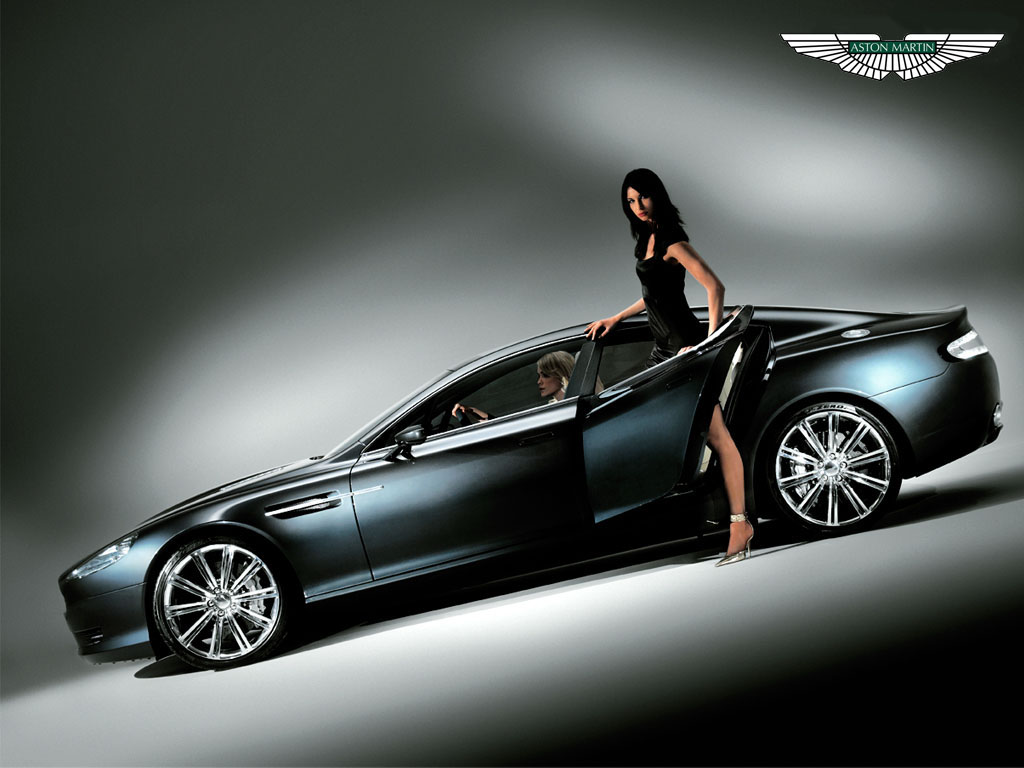
2010 Aston Martin DBS Edo Competition Luxurious Sports Car
Tuesday, May 25, 2010
Aston Martin V8 history
The engine was not ready, however, so in 1967 the company released the DBS with the straight-6 Vantage engine from the DB6. Two years later, Tadek Marek's V8 was ready, and Aston released the DBS V8. With the demise of the straight-6 Vantage in 1973, the DBS V8, now called simply the Aston Martin V8, became the company's mainstream car for two decades. It was retired in favour of the Virage in 1989.
Aston Martin V8
Aston Martin V8
Aston Martin V8
Aston Martin V8
Aston Martin V8

Aston Martin V8
Aston Martin V8
All Review videos and more of:• Infiniti• Mitsubishi• Aston Martin• Isuzu• Nissan• Audi• Jaguar • Pontiac• Bentley• Jeep• Porsche• BMW• Kia• Rolls Royce• Buick• Lamborghini• Saab• Cadillac• Land Rover• Saturn• Chevrolet• Lexus• Scion• Chrysler• Lincoln• Smart• Dodge• Lotus• Subaru• Ferrari• Maserati• Suzuki• Ford• Maybach• Tesla• GMC• Mazda• Toyota• Honda• Mercedes-Benz• Volkswagen• HUMMER• Mercury• Volvo• Hyundai• MINI.and MORE....
Saturday, March 27, 2010
Sunday, March 21, 2010
Monday, March 15, 2010
Thursday, March 11, 2010
Saturday, February 13, 2010
Top Luxury Cars - The Last Hand Crafted Aston Martin
Aston Martin was initially questioned about the engine. Some thought it was the product of Ford. It was felt that the company had combined two Ford Duratec three litre engines. This proved to be incorrect, although there were some parts of that engine that were used. The 5.9 litre V12 engine, 460bhp that made up the Vanquish was definitely created differently from the Duratec.
Problems did plague the first versions of the Vanquish. The primary concerns were of the paddle shift manual gearbox and the handling of the vehicle. There was a comparison to the gearbox on the Ferrari which was extremely flawless when shifting. The performance of the Vanquish under original conditions was fine, but when the car was pushed hard the gearbox failed.
Aston Martin didn't work on the gearbox problem until the Ultimate Edition Vanquish that was produced in 2007. There were a total of forty cars in this line that finally resolved the paddle shift manual gearbox issue. In fact the company was so pleased with the new conventional manual stick shift gearbox they were willing to install them into previous Vanquish models.
While the Vanquish may have had some issues in the early days it was still a very popular vehicle. The dominance of the automobile on the road showcased the familiar Aston Martin trademarks. They began with the extended bonnet, which lead the eye to the unmistakeable front grille and the xenon headlights. The wheel arches protruded boldly and the side strakes completed the Aston Martin design.
The Vanquish S of 2005 was another effort to reduce disapproval. The S series has 520 horse power. It can reach 240 miles per hour, and go from a resting state to 60mph in 4.7 seconds.
The S series has a "Sports Dynamic Pack" on all models, rather than an extra component. The pack is designed to increase performance of steering, braking, and manoeuvrability.
In 2007 the Aston Martin Vanquish was discontinued and it was replaced with the new DBS model that was based around the more modern and highly acclaimed DB9. In 2010, Aston is rumoured to be releasing a proper Vanquish replacement, however as production has now moved to Gayden in Warwickshire it is unlikely to recreate the hand built construction of the stunning but flawed Vanquish.
Article Source: http://EzineArticles.com/?expert=Ethan_Melandri
Wednesday, February 10, 2010
2009 Aston Martin V8 Vantage
Aston Martin, freshly free of author Motor Company, is trying to become the incoming Porsche, a small, low-volume, high-profit sports car company, just as Porsche becomes the incoming dweller worker purchase up Brobdingnagian chunks of Volkswagen AG.
Take the V8 Vantage, Aston’s competitor for the 911. Please. Because if you hit a lot of money and a discernment of taste, the Vantage is worth kindness as an alternative to the Best Sports Car Ever. You can see this Porsche strategy in the 2009 V8 Vantage, a bonny two-seat coupe and auto that’s apace becoming an iconic luxury sports car design. Like Porsche with the 911, Aston won’t be updating the Vantage with facelifts every few years. The ‘09 V8 Vantage looks exactly same the ‘08 V8 Vantage, save for newborn 19-in. wheel designs and some interior tweaks.
The big change is under the hood. Aston Martin has bored and stroked the 4.3L V-8 (saying it has, in essence, fashioned a newborn block) to 4.7 L. Now it has 420 hp, up 11 percent, and 347 lb-ft of torque, up 15 percent. The newborn V-8 has thinner chamber liners, a newborn forged-steel crankshaft with newborn holes in the counter-weights for reduced rotating mass and better inter-bay breathing, newborn forged-steel connecting rods and cast-aluminum pistons, a newborn sump sportfishing for the dry-sump fill grouping and oil restorative points moved to the sides of the pump, from the front and rear. The chamber heads hit a newborn intake port and bigger inlet valves, accumulated 1 mm to 35. Aston has modified the intake increase to match the newborn port to optimize airflow. The engine ease comes from Ford’s Cologne, Germany, factory.
In the Vantage, the newborn V-8 is hurried and fast. Does it see 40 hp more than a 4.3L Vantage? Yes, marginally, though this is really the sort of thing that shows up better in helper testing. Punch the enrich in second, or especially third gear on brief Eiffel Mountain straights between tight turns, and it feels same you’ve got all the noesis you need. So did the old 4.3 — this is just more immediate, thanks to that higher force figure. The V-8 ease sounds docile around town, rorty under throttle.
Aston Martin also worked on the transmissions, modifying the aggregation and flywheel, reducing aggregation pedal efforts for the accepted six-speed manual and action 1.1 lb (for low rotating group and thus better engine responsiveness) with either the manual or the six-speed Sportshift twin-clutch automanual. Engineers remapped the Sportshift, but it still feels too slow (with no driver-operated programming system). The only way to drive it smoothly is to lift patch shifting, which really defeats the paddle-shifter’s purpose. The full manual feels nearly perfect, both stagehand and clutch, but the stagehand sits gangly on the edifice console, which causes a driver to elbow himself patch movement gears.
Aston has upgraded the suspension, too, including stiffer springs and accepted Bilstein dampers. Apparently responding to some criticism that the V8 Vantage was too soft, Aston has additional an optional Sports Pack, which includes forged lightweight alloy wheels (the five-spoke organisation is nice; there’s also a newborn 20-spoke design), uprated springs, and on the coupe a revised rear anti-roll bar.


8:35 PM
wong jowo